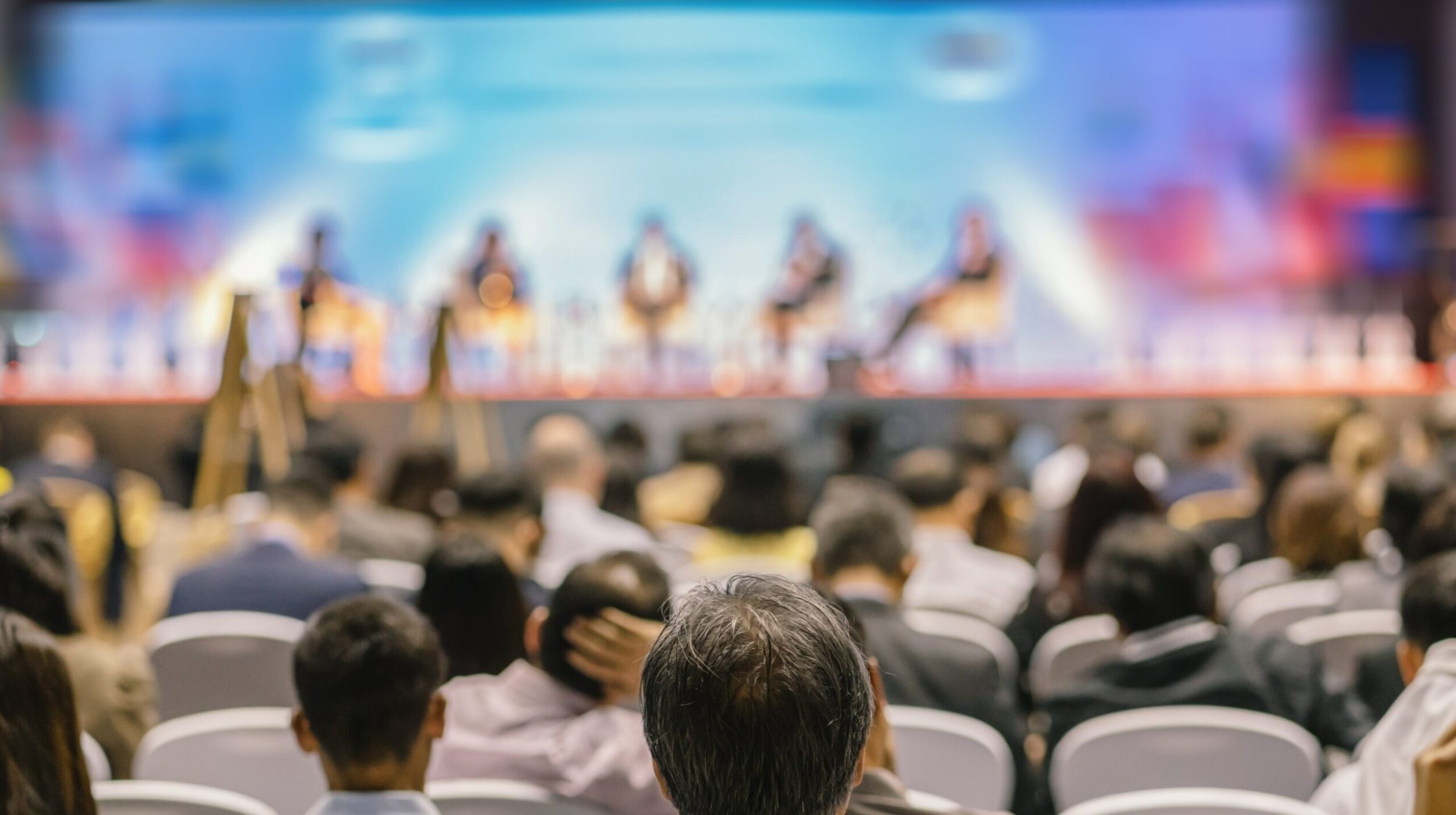

In an era of AI-generated content, information overload and increasingly crowded event programmes, the value of a live conversation has never been greater.
Conferences and industry events remain powerful opportunities to build credibility, influence opinion and connect with new audiences.
But for anyone invited to take part in a panel discussion, there is an important distinction between simply being present and making a genuine impact.
Being a good panelist is not just about knowing your subject. It is about knowing how to communicate your expertise, contribute to a conversation and leave a lasting impression.
From expert to engaging contributor
Being invited onto a panel is recognition of your knowledge, experience or perspective. Yet subject-matter expertise alone does not guarantee a successful performance.
A panel discussion is a unique format. Unlike a keynote speech, it requires you to think on your feet, listen actively, respond to other speakers and make your point within a limited timeframe.
You may have just 60 seconds to articulate an idea that could shape how an audience thinks about an issue.
The challenge is to communicate with clarity and confidence without dominating the conversation or disappearing into the background.
This is particularly important in today’s events environment, where audiences expect more than recycled talking points and polished corporate messaging.
They want authentic perspectives, practical insights, healthy debate and speakers who can bring complex subjects to life.
Preparation is the competitive advantage
One of the biggest misconceptions about panel participation is that experienced professionals can simply turn up and speak naturally.
While experience is valuable, effective panelists understand that preparation is what allows them to be spontaneous, responsive and compelling.
Preparation starts well before the event itself. It means understanding the audience, researching the event’s themes, clarifying the panel’s objectives and anticipating the questions most likely to arise.
It also means identifying the two or three messages you want people to remember after the discussion has ended.
These messages should be supported by relevant examples, evidence, personal experience or a fresh perspective.
Rather than attempting to cover everything you know, the aim is to contribute something distinctive and useful.
Just as importantly, preparation involves practicing how to deliver those messages concisely, handle challenging questions and bridge back to your key points without sounding rehearsed.
Confidence comes from technique
Even highly accomplished leaders can find panel discussions challenging. Interruptions, unexpected questions, competing viewpoints and the pressure of speaking in front of an audience can all affect performance.
The strongest panelists develop techniques to manage these moments. They learn how to structure concise answers, use stories to make ideas memorable, disagree constructively and build on other contributors’ points.
They also recognise that listening is as important as speaking. A panel is a conversation, not a series of individual presentations. The ability to respond thoughtfully to another speaker can create the most valuable moments of the discussion.
These skills are not simply personality traits. They can be developed, practiced and refined through focused panel guest training.
Make every appearance count
In a world where professional visibility matters and reputations are built across both physical and digital channels, a panel appearance can have a lasting impact beyond the room.
A memorable contribution may be quoted on social media, shared in a conference recap, referenced in a future meeting or become the starting point for a new business relationship.
But those opportunities are not automatic. They depend on the quality of the contribution.
The best panelists do not just answer questions. They shape conversations, offer fresh perspectives and give audiences something worth remembering.
For organisations investing in conferences, thought leadership and professional visibility, preparing speakers should be part of the strategy, not an afterthought.
At Headline Media UK, we help panel guests develop the confidence, communication skills and practical techniques to make every appearance count.
Because the real value of being invited onto a panel lies not in taking your seat, but in making your voice heard.